Research notes

Practical questions behind the archive

What source material do you use?

We work from regional archives, harbor records, newspapers, family collections, and field notes. Each page is based on sources we can cite and revisit.

How do you date old photographs?

Dates come from original captions when available. If not, we estimate by cross-checking tower alterations, uniforms, weather logs, and publication history, then label uncertain dates clearly.

Why do some locations have multiple names?

We retain historical names used in the period record and pair them with current place names. This helps readers connect older documents to present-day maps.

What is included in the preserved towers map?

The map tracks standing lighthouse structures on the northern coast. Lost towers, temporary lights, and uncertain sites are documented in notes but not plotted as preserved locations.

How do you balance fact and storytelling?

Narrative passages are grounded in documented events. Where evidence is partial, we say so directly and separate interpretation from confirmed record.

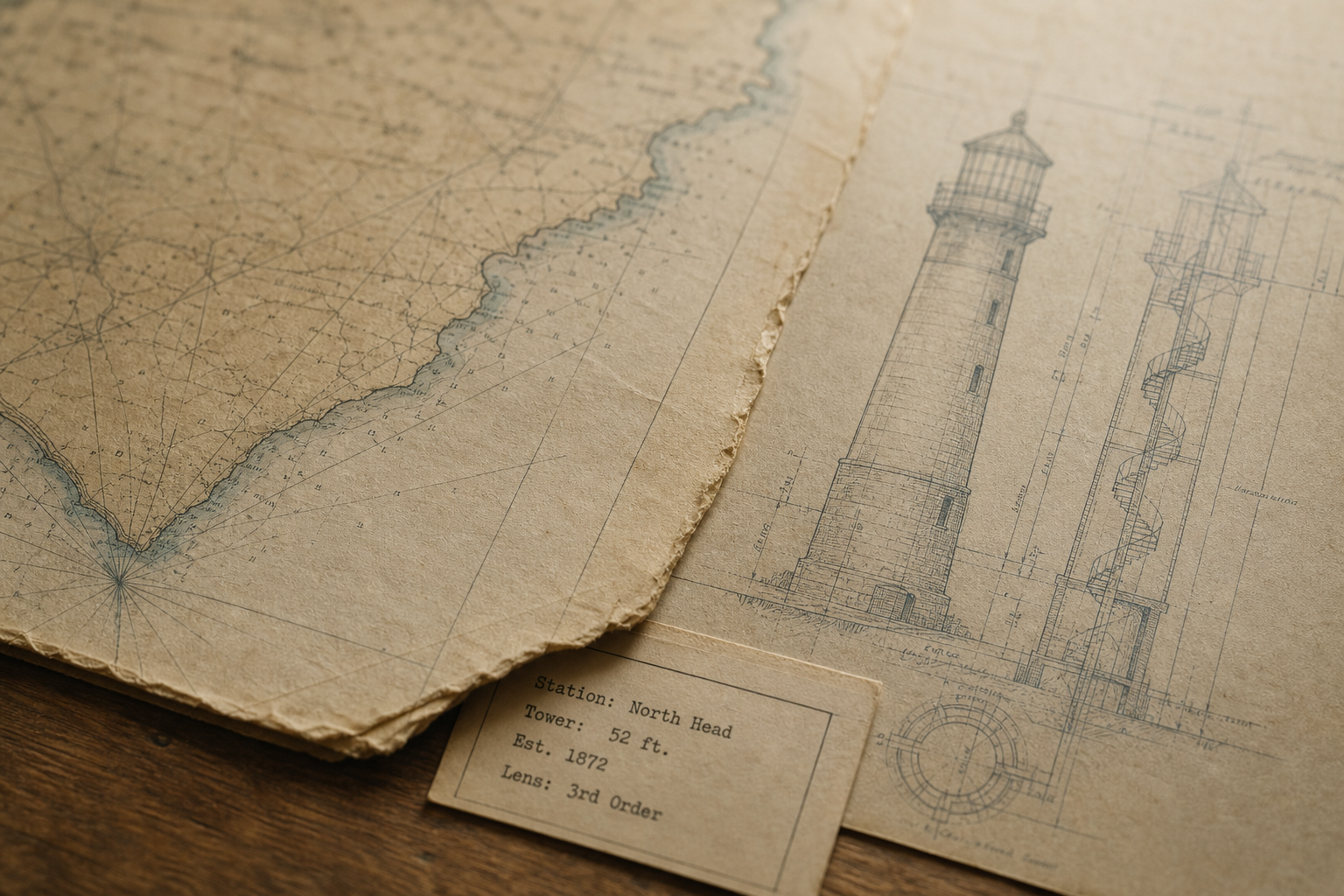
Close-up of a weathered paper map edge with an archival label and faint lighthouse blueprint lines
Archive working reference, northern coast records

About the archive

The Northern Coast Lighthouses Archive is a reference project built to preserve place-based lighthouse history through documentary photographs, keeper accounts, and surviving tower records. It is designed for careful reading, comparison, and long-term public access.

Each entry is reviewed for source clarity, date confidence, and location accuracy. Where evidence is partial, notes identify uncertainty so visitors can distinguish verified facts from informed interpretation.

Guiding principles

  • Document first: prioritize primary records, dated imagery, and traceable citations.
  • Context matters: pair visual material with coastal, social, and operational history.
  • Editorial transparency: clearly mark restorations, gaps, and ongoing research notes.